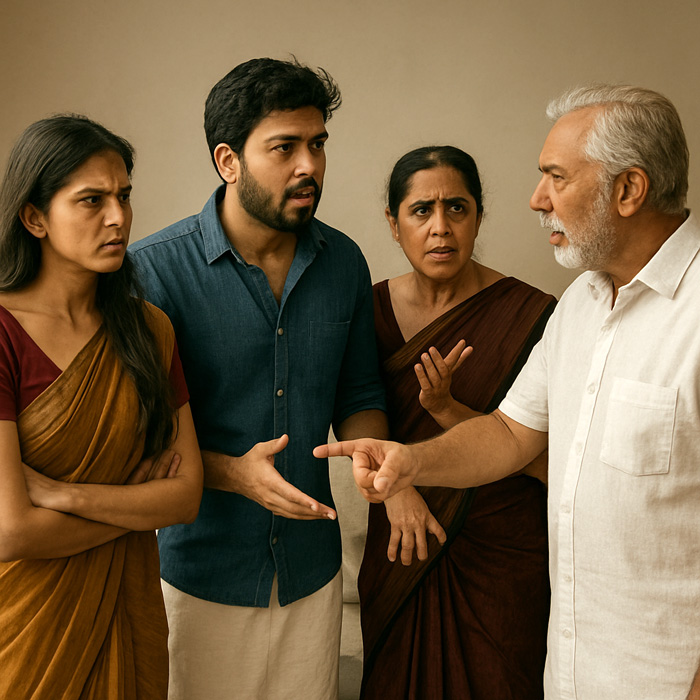
The Changing Nature of Family Conflicts
Indian society, including traditionally conservative communities like the Maha Balija, is experiencing significant changes in family structures and relationships. While the national divorce rate remains low compared to global standards, urban India has seen divorce rates double over the last twenty years. Karnataka, for example, experienced a dramatic increase in divorce filings, rising from about 20,000 in 2020 to over 66,000 in 2022. These numbers reflect not only a growing willingness to pursue legal solutions but also a decline in traditional conflict-resolution methods that once occurred within extended families or communities.
Among the Balija and Kapu sub-castes, traditionally known for strong kinship networks and patriarchal structures, younger generations are increasingly asserting their autonomy in personal relationships. When disputes over marriage, separation, maintenance, and child custody arise, families are often unprepared to handle them within the existing cultural framework.
Legal proceedings, while accessible, tend to be expensive, prolonged, and emotionally draining. Moreover, courts rarely consider the cultural sensitivities and intra-community dynamics of such cases.
The MBDRC aims to provide early intervention in marital disputes, especially during the crucial first five years of marriage, when nearly two-thirds of separations typically occur. Its mediatory role includes counseling, confidential negotiation platforms, and fair custody and maintenance agreements. By basing these interventions on both legal literacy and cultural understanding, the MBDRC seeks to reduce the number of cases escalating into adversarial court battles.